
Skip to content

PrestaShopDevOpsIntegrationsAI & automationMobile apps

We design and develop the systems your business runs on

BestCoding combines code, infrastructure, integrations and automation into systems that operate reliably and predictably. From technical consulting and planning through implementation to monitoring and maintenance.

15+ years
engineering experience
Complex eCommerce
architecture & integrations
DevOps & Infrastructure
Linux, Docker, monitoring
Technical ownership
architecture & reliability
PrestaShop
PHP
Docker
Linux
Grafana
Cloudflare
MySQL
Redis
Nginx
Python
Git
CI/CD
PrestaShop
PHP
Docker
Linux
Grafana
Cloudflare
MySQL
Redis
Nginx
Python
Git
CI/CD

Engineering expertise across the full stack

Deep expertise across code, infrastructure and project management — evaluating not only how to implement, but whether it will be secure, scalable and cost-effective.

  • Better technology decisions
  • Fewer costly mistakes
  • Scalable and secure solutions

For: store owners, SaaS startups, IT agencies

PrestaShop Expert

Direct technical contact

From the first conversation, you work with the person who analyzes the problem and delivers the agreed scope — without a separate handoff between sales and delivery.

See how collaboration and estimates work

Selected work

Three different kinds of work: a field app that has to run without a network, an automation for handling support requests, and an integration that routes an order across several locations.

Field app · residential developers

Offline handover inspections

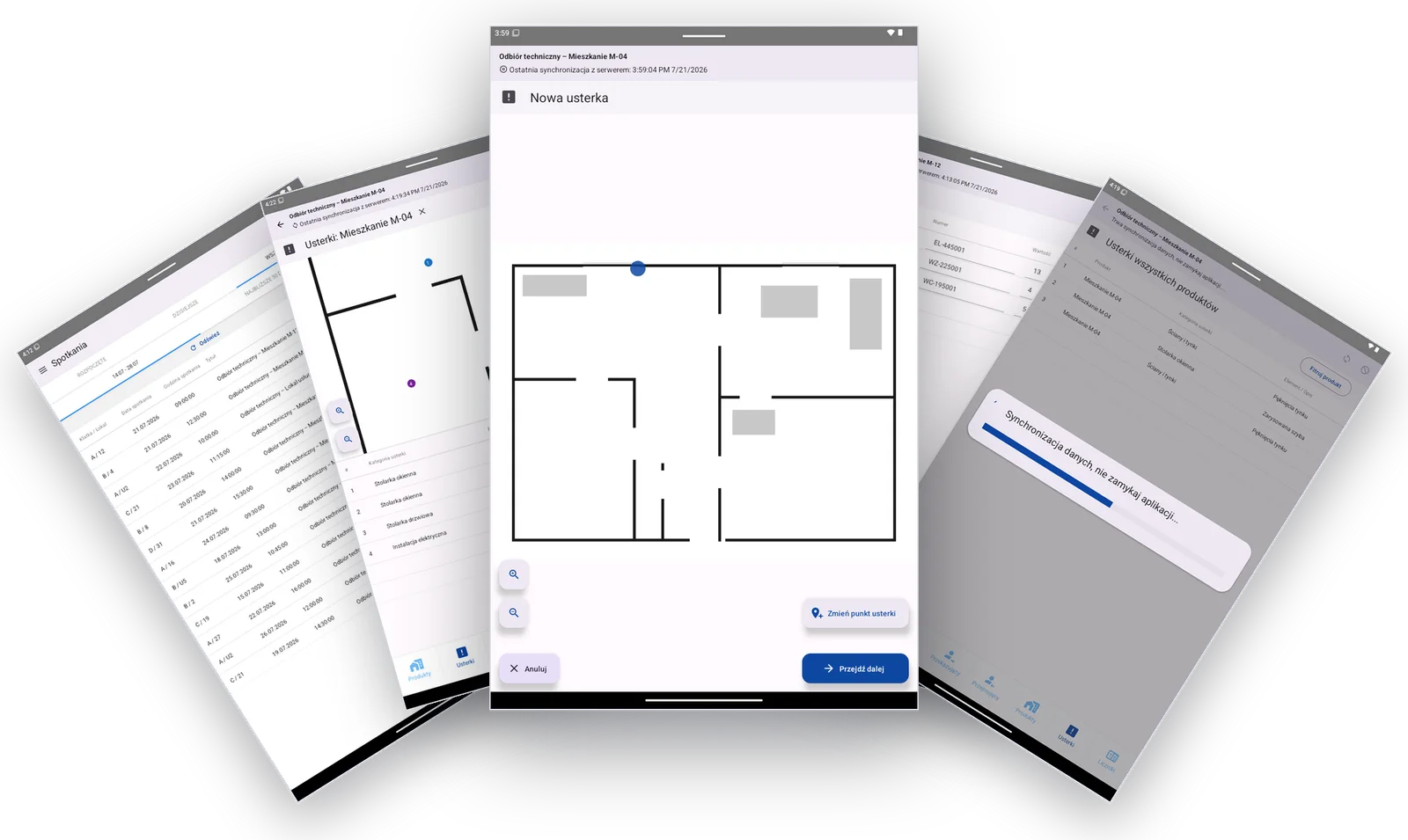
The inspection happens inside an empty apartment, where there is usually no signal — and it still has to end in a signed report. We built the app so that missing coverage is not an edge case to work around, but the normal condition it runs in.

In production use at both developers, developed further on what the field teams report.

Echo InvestmentArchicom
Read the full case study
Screens from the handover inspection app: the meeting list, a floor plan with a defect marker, the new-defect form and data sync.

AI automation · supporting the technical team

A ticket that arrives with its context

The expensive part of handling a request is often not the fix but assembling the context: documentation, history, code. That work now happens before the ticket is opened, so a person starts from prepared material instead of searching for it.

A human always makes the decision — the system prepares material for review and never sends or deploys anything itself.

See how it works
  1. Customer request
  2. Documentation, history and code
  3. Analysis and verification
  4. Material for the engineer
  5. Human decision
The last step always belongs to a person.

Integration · online and in-store sales

An order that finds its location

The stock sits across several points of sale, so simply passing an order from one system to another solves nothing. Fulfillment rules point to the location that should prepare it — and split it across several when no single one holds everything.

Prices and stock flow from Subiekt GT into the store in the background. Staff only see the products they pick at their own location.

See the full project
  1. Order in the store
  2. Availability check per location
  3. Fulfillment rules
  4. Tasks in a dedicated app
  5. Parcels from several locations
When one location is short, the order splits into several.

Less manual work, more certainty the system holds

From customer support and sales analytics through store performance to backups. We automate the repetitive work and check the areas that should not be left to assumption.

AI automation · customer support

The draft reply is ready before you open the message

If your team answers similar questions every day, AI can recognise what a message is about and draft a reply from your own knowledge base and procedures.

Someone reviews the draft, adjusts it, and decides whether it goes out. Control over what you send stays with you.

Faster replies, consistent wording, and more time for the cases that genuinely need a person.

See what AI and automation can do

eCommerce · analytics and conversions

The ads may be working while analytics fails to show it

Before you raise a campaign budget, it is worth checking whether GA4, GTM and the ecommerce events record actual sales. Missing or duplicated transactions can make effective advertising look unprofitable — and train the algorithms on wrong data.

A high cart-abandonment rate does not always mean the offer is the problem either. It can be a broken form, a payment failure, or a checkout path that is simply too long. Full tracking shows the step where customers actually drop out.

You set budgets from data that describes the sales you actually made.

Check your store analytics

PrestaShop · performance audit

You know what slows the store down before any fixes start

A slow store rarely has one cause. Usually several things stack up: render-blocking resources, inefficient database queries, modules adding their own scripts, server configuration.

Instead of shipping fixes at random, we start with measurement. You get the real causes, what each one costs you, and the order to change them in.

You know where to start and what to expect before anyone touches the code.

See how we speed up stores

DevOps · backup and restore

The backup exists — but can it actually be restored?

A backup job reporting success does not yet mean the company is safe. The copy may be incomplete, corrupted, stored only on the production server, or encrypted with a password nobody can find.

The only reliable test is restoring the data to a separate environment and checking that the database, the files, the configuration and the whole application really run.

A backup nobody has ever restored is not a backup — it is a hope.

Check your backups

How we work

  1. 1

    Scoping

    We pin down the goal, risks and priorities from your description. You get a clear picture of the situation and a plan for next steps.

  2. 2

    Plan & early improvements

    You receive a detailed action plan. Quick wins get implemented right away.

  3. 3

    Implementation with testing & rollback

    Changes go through a staging environment first, get verified, and deploy to production with rollback capability.

  4. 4

    Monitoring, backup, documentation

    After deployment you get monitoring, backups and full documentation. Your system works predictably.

Practical knowledge about eCommerce and technology

On the blog we share what comes out of working on live stores, servers and business systems. We show how to solve real technical problems and make better decisions.

You will find material on PrestaShop, store performance, DevOps, Linux servers, security, system integrations, and automation and AI. No marketing generalities — specific explanations, examples and solutions you can apply yourself.

Whether you run an online store, build a SaaS application, or are responsible for company infrastructure, you will find knowledge here that helps you build systems that run faster, more securely and more predictably.

Latest articles

Go to the blog

Why BestCoding rather than another software house?

A good technology partner should do more than work through a task list. They should understand which business problem the technology is meant to solve, anticipate the risks, and take responsibility for the outcome.

We combine over 15 years across software development, eCommerce, server administration, DevOps, integrations and process automation. That lets us look at a project as a whole — from code and architecture through infrastructure to security, monitoring and long-term maintenance.

We do not propose a technology because it is popular. We choose solutions that are justified, secure, maintainable and matched to what your business actually needs.

Read more

Experience that avoids expensive mistakes

Technical problems rarely come down to a single fault. A slow store can be the result of a badly written integration, an overloaded database, a misconfigured server, or a module issuing hundreds of unnecessary queries.

That is why we do not treat symptoms. We look for the source and check the dependencies between the application, the infrastructure and the business processes. You get more than the work you commissioned:

  • a risk assessment,
  • a recommendation for the best solution,
  • an implementation plan,
  • tests before go-live,
  • a safe way to roll the change back,
  • documentation and a maintenance plan.

That reduces the risk of downtime, follow-up fixes, and costs that could have been avoided at the planning stage.

Direct contact with an experienced engineer

You do not pass through several support tiers before your question reaches someone technical. You work directly with the engineer who analyzes the project, recommends the solution and is accountable for delivering it. This means:

  • you get a specific answer sooner,
  • nothing gets lost in a handoff between sales, coordination and delivery,
  • technical choices account for business goals,
  • scope, timelines and costs are easier to control,
  • one person holds the full context of the project.

On larger engagements we bring in trusted specialists for the parts that need them. Accountability for architecture, quality and coherence still sits in one place.

One supplier instead of four

Writing the code is not enough if the application runs on a badly configured server. Equally, solid infrastructure will not fix problems caused by inefficient software or a broken integration.

PrestaShop, DevOps and integrations are core competencies here — so a diagnosis does not stop at the boundary between the code, the server and the external systems. We combine skills that many companies have to split across several suppliers:

  • PrestaShop development and maintenance,
  • custom modules and bespoke functionality,
  • integrations with ERP, payments, logistics and external systems,
  • Linux server administration,
  • Docker, CI/CD and deployment automation,
  • monitoring, alerting and backups,
  • application and database performance work,
  • technical, security and code-quality audits,
  • practical AI implementations and process automation.

That means less responsibility being passed between the developer, the sysadmin, the host and an external vendor. Problems are analyzed as a whole, and every part of the solution can be planned as one coherent system.

Solutions matched to your situation

Not every company needs a large implementation, a cloud migration or another expensive tool. Sometimes the best answer is a configuration fix, removing one bottleneck, or tidying up a process that already exists.

The work therefore starts by understanding the goal, the constraints and the priorities. The scope comes after that. It might be:

  • a one-off consultation or an independent diagnosis,
  • an audit of the store, the code, the infrastructure or security,
  • a project with a defined scope and schedule,
  • a system migration or integration,
  • fixing one specific performance problem,
  • ongoing technical care on a retainer,
  • long-term development of a store or its infrastructure.

You pay for solving the problem you have, not for a bundle of services your company will never use.

Transparent collaboration

Technology should not be a black box. Before work starts you get the proposed scope, the stages, the risks and the costs.

If the analysis turns up a better or more cost-effective route, we put it to you before implementing anything. If a particular solution has no business case, you will hear that plainly too.

No hiding problems behind technical jargon. No changes that nobody can maintain afterwards. No leaving the client dependent on knowledge that lives only in the supplier's head.

Results you can verify

Performance, stability and security should rest on data. So wherever possible we compare the state before and after the work. Depending on the project, that can include:

  • server response time,
  • store load speed and Core Web Vitals,
  • the number and duration of database queries,
  • product import or process completion times,
  • application error counts and service availability,
  • backup integrity,
  • time to deploy a new version,
  • infrastructure or automated-process costs.

You know what changed and what the work actually achieved.

Safe changes to production

Changing a live store or system calls for particular care. A mistake during deployment can mean an unavailable site, order problems or data loss.

Work is planned around tests, backups and a way to roll the deployment back. Depending on the project, changes are prepared in a separate environment and verified before they go live.

Security is not a single feature. It is how the whole system is designed: correct permissions, updates, monitoring, logs, backups and a controlled deployment process.

Technology that supports sales and growth

An online store is not just a set of modules and files. It is a sales tool that has to be fast, stable and predictable.

When we work on eCommerce we therefore also look at the purchase flow, the integrations, the analytics, and the places where a company may be losing time or customers. Technical optimization should lead to a concrete outcome: a store that runs better, fewer incidents, faster order handling, and the conditions to scale sales further.

We treat automation and AI the same way. An implementation should save time, cut errors or speed a process up — not exist because it uses a new technology.

A partner for hard technical problems

We also support companies when the standard answers have stopped working. We can help when:

  • the store slows down under heavier traffic,
  • checkout or the cart behaves unpredictably,
  • an ERP or payment integration produces errors,
  • a previous migration ended in problems,
  • server costs are rising with no clear cause,
  • deployments are manual and risky,
  • monitoring and verified backups are missing,
  • the company has no CTO and needs an independent technical assessment,
  • you are unsure about the quality of code a supplier is delivering,
  • the problem needs development, infrastructure and business knowledge combined.

We start with a diagnosis. You then get priorities and a remediation plan — whether BestCoding carries it out, your in-house team does, or another supplier does.

Tell us about your project

Describe what you want to achieve in a message. We'll reply with specific follow-up questions and a clear scope proposal, so the next step is easy to handle across time zones. If a live 60-minute technical consultation would help, we'll arrange one.